
NanoKnife (Irreversible Electroporation)
Show video transcript
Prostate cancer traditionally has been treated with either observation or surgery and radiation treatment. There hasn’t really been a middle ground, and studies have shown that obviously patients have a lot of side effects with surgery and radiotherapy, and that perhaps there are some cancers that don’t need to be treated as aggressively.
So there is a growing field now of management and a thought process that maybe some intermediate cancers that are well visualised on MRI scanning or other imaging such as PSMA PET scan and confirmed on biopsies can be treated with focal therapy.
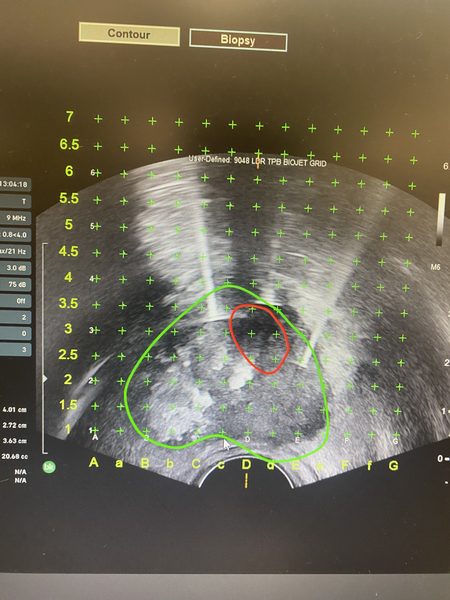
So what we do is when we see this abnormality on an MRI scan or a PSMA scan we can use our transperineal method, which is between the scrotum and the back passage, with a grid to target these areas and to make sure there’s no cancers in the rest of the prostate.
If we confirm that there’s just a solitary cancer in the prostate, maybe even two cancers next to each other, and we have perfect correlation between the imaging and the biopsy and the imaging can be MRI or PSMA PET scan, then we can consider treating that area with a specific treatment. There’s a variety of ways that can be treated.
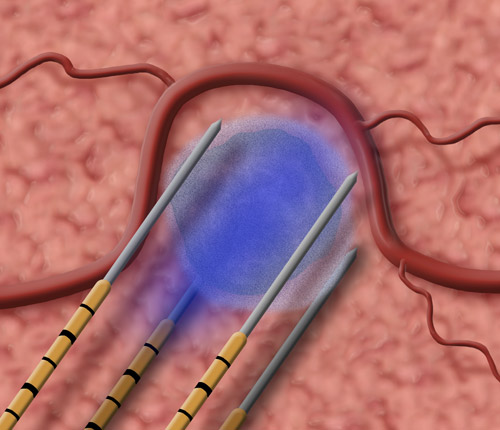
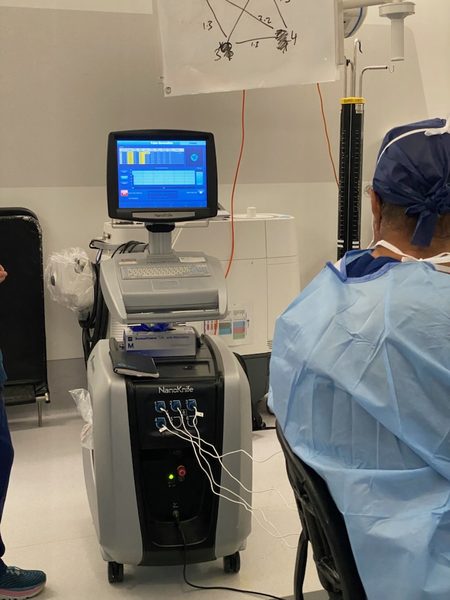
What I’m doing here at St Vincent’s is using NanoKnife treatment, which is electroporation, and what we do with that is we put needles in to where the cancer was, surrounding the cancer basically with an extra margin of a centimetre, and then we activate the machine and we get electrical energy between those electrodes and the cells in between then die.
The way this works, which is quite unique, is there’s no heat treatment. The electrical energy actually makes small holes in the cancer cells and these cells die, so that’s called electroporation and it’s a very promising technique, and certainly I think it is something that could be considered for patients who have an intermediate grade cancer, maybe a Gleason 7 or a grade group 2 we call them now, with just a small area of involvement and those patients could be treated in that way.
It’s important to know that those patients need to be followed up and we would usually do an MRI scan at six months and a repeat biopsy at 12 months. The complication profile is very low. There’s virtually no incontinence and probably only a 10% chance of erectile dysfunction with about a 15% chance of recurrence.
There’s now intermediate data up to five years which has been very promising in terms of outcomes, so I think this is a very new and innovative technique and treatment modality and certainly should be discussed with patients.
At a glance
- What it is: A minimally invasive, image-guided ablation technique that uses short, high-voltage electrical pulses delivered between thin needle electrodes to disrupt cell membranes in a planned treatment zone. NanoKnife is the trade name of the AngioDynamics system used to deliver Irreversible Electroporation (IRE).1,2,3,16
- How it differs from other ablations: Standard radiofrequency, microwave and cryotherapy ablations work mainly by heating or freezing tissue. IRE works through a different physical mechanism - the electrical field, not temperature - which can be useful when a target sits close to vessels, ducts or nerves that heat-based ablation may injure.1,3
- Who it suits: A small, carefully selected group of patients. In urology the main role is focal therapy for selected localised prostate cancer identified on multiparametric MRI and confirmed by targeted biopsy.4,5,6,7,9 IRE has also been studied in selected small renal masses, primary liver cancer and locally advanced pancreatic cancer in dedicated multidisciplinary settings.10,11,12,13,14,15
- What the evidence shows: In carefully selected men with localised prostate cancer, primary focal IRE has shown encouraging short- to medium-term oncological control and low rates of significant urinary and sexual side effects in published series, including a median 5-year Australian cohort.4,6,7,9 Long-term comparative data against radical prostatectomy or whole-gland radiotherapy are still maturing.4,9
- Where Urology NSW sits: Dr Raji Kooner offers NanoKnife / IRE for selected localised prostate cancer cases at Urology NSW, alongside the full spectrum of other prostate cancer treatments (active surveillance, robotic radical prostatectomy, radiotherapy, brachytherapy and other focal options). The recommendation in any individual case is made after MRI, biopsy and clinical review, not on the basis of any single technology.
What is NanoKnife / IRE?
NanoKnife is the trade name of a system manufactured by AngioDynamics that delivers Irreversible Electroporation, usually shortened to IRE.16 Two to six thin needle electrodes are placed into and around the target tissue, and the generator delivers short, high-voltage direct-current pulses (typically in the range of microseconds, at field strengths of around 1,500 V/cm) between pairs of electrodes.1,2,3
The pulses create permanent nano-scale defects in the cell membrane, which leads to programmed death of cells inside the planned treatment zone.1,2 Because the mechanism is electrical rather than thermal, the supporting connective tissue scaffold (extracellular matrix) of vessels, ducts and nerves is largely preserved, and there is no large heat sink effect from nearby blood flow.1,3,8 In urology, this is the property that has driven interest in IRE as a focal treatment near the prostatic neurovascular bundles, urethra and external sphincter.4,6,7
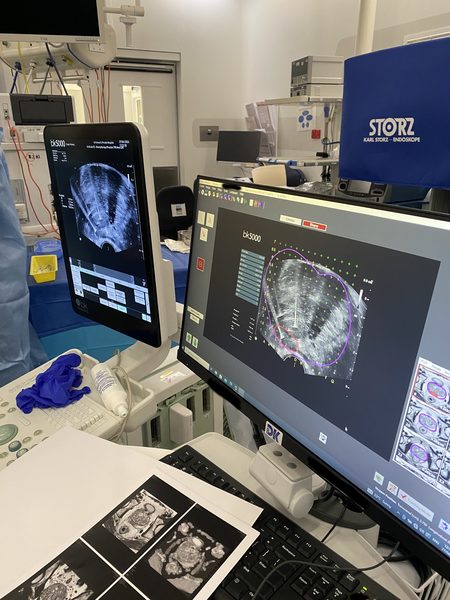
Probes are placed under image guidance, most often using transperineal ultrasound combined with multiparametric MRI fusion for prostate cases. The treatment plan defines an "ablation zone" that covers the index lesion plus a planned margin.4,7,8
How is IRE different from heat- or cold-based ablation?
Most other ablative technologies destroy tissue by changing its temperature:
- Radiofrequency and microwave ablation heat tissue past the point at which proteins denature.
- HIFU (high-intensity focused ultrasound) heats a focal point with sound waves.
- Cryotherapy freezes tissue with circulating gas inside a probe.
Two features of IRE follow from its non-thermal mechanism, and they are the reasons it is sometimes considered when heat-based treatment is anatomically risky:1,3
- Relative preservation of nearby tubular structures. Bile ducts, ureters and large blood vessels rely on a connective-tissue scaffold that IRE largely spares; with thermal ablation, that scaffold can be heated past its tolerance and the vessel or duct can be injured.3,12,13
- No heat sink effect. Heat-based ablations can be drawn off into adjacent flowing blood, leaving uneven ablation at the edge of a tumour next to a large vessel. IRE is not affected in the same way.1,3
These properties have to be weighed against IRE's own constraints: probe placement is geometrically demanding, the patient must receive deep general anaesthesia with full muscle relaxation and synchronised cardiac gating to prevent arrhythmia from the high-voltage pulses, and long-term comparative outcome data against established treatments are still accumulating.1,3
What the evidence shows
Prostate cancer (the main urological use)
The majority of IRE evidence in urology is in focal therapy for localised prostate cancer - treating only the part of the gland where significant cancer has been clearly demonstrated on multiparametric MRI and confirmed by targeted biopsy, rather than treating the whole prostate.4,5,9 The aim is cancer control with lower rates of urinary incontinence and erectile dysfunction than whole-gland surgery or radiotherapy can achieve, accepting that some patients will need additional focal treatment, surgery or radiotherapy later.6,7,9
Australian 5-year focal IRE series. Blazevski and colleagues (Stricker group, Sydney) reported median 5-year outcomes of primary focal IRE in 123 men with significant localised prostate cancer (BJU International, 2023). At a median follow-up of 5 years, 88% of men were free from progression to whole-gland or systemic treatment, continence preservation was high, and erectile function was preserved in most men who were potent before treatment. In-field recurrence requiring further treatment was reported in a minority of men, supporting structured MRI and PSA follow-up.6
2024 multi-centre international study. Collettini et al. reported safety, functional and oncological outcomes of IRE for prostate cancer across multiple centres, with similar themes: low rates of significant urinary and sexual side effects, encouraging short- to medium-term oncological control in selected men, and a clearly defined need for ongoing surveillance.7
NICE 2023 guidance. The UK National Institute for Health and Care Excellence reviewed IRE for prostate cancer in Interventional Procedures Guidance IPG768 (2023). The guidance concludes that IRE for prostate cancer can be used with standard arrangements for clinical governance, consent and audit, with explicit recognition that further evidence on long-term cancer control and the need for additional treatment is required.4
EAU 2024 prostate cancer guidelines. The European Association of Urology guidelines list whole-gland and focal ablative therapies (including HIFU, cryotherapy and IRE) as options that should currently be offered within a clinical trial or well-defined prospective registry, with full counselling that long-term oncological outcomes have not been compared head-to-head against radical prostatectomy or radiotherapy.5
Imaging validation. A phase I-II study by van den Bos and colleagues correlated post-IRE MRI and contrast-enhanced ultrasound with whole-mount pathology after planned radical prostatectomy, providing direct evidence of the size and shape of the IRE ablation zone in the prostate.8
Updated systematic review. Hopstaken et al. (2022) reviewed five years of focal therapy literature for localised prostate cancer across all modalities (HIFU, cryotherapy, IRE, focal laser ablation, focal brachytherapy) and concluded that focal therapy is a reasonable option in carefully selected men, but that randomised comparative data and standardised reporting are still needed before any focal modality can be considered equivalent to whole-gland treatment.9
Other organs (information only)
IRE has been studied in selected non-urological and adjacent settings. These applications are generally coordinated by other multidisciplinary teams; the rooms at Urology NSW primarily manage urological cancers and may suggest referral to a centre with the relevant capability when a non-urological IRE question arises.
- Locally advanced pancreatic cancer. Reviewed by NICE in IPG579 (2017) and reported in the multicentre PANFIRE-2 phase II trial (Ruarus et al., Radiology 2020). IRE is technically demanding and is considered only after systemic therapy and full multidisciplinary review at experienced centres.10,11
- Primary liver cancer. Reviewed by NICE in IPG664 (2019), with discussion of lesions where heat-based ablation could risk injury to adjacent bile ducts or major vessels.12
- Renal cell carcinoma (kidney). NICE IPG443 (2013), the first-in-man phase I study by Pech et al. (2011), the IRENE ablate-and-resect pilot (Wendler et al., 2018), and the mid-term clinical experience from Wah et al. (2021) all describe IRE as a research-level option for selected small renal masses where heat ablation is anatomically difficult, for example tumours abutting the collecting system.13,14,15
Where the evidence is not yet definitive
- There are no randomised trials directly comparing primary focal IRE against radical prostatectomy or radiotherapy for matched groups of men with localised prostate cancer.4,5,9
- Long-term cancer outcomes (10 years and beyond) for primary focal IRE are not yet available at the same depth as for surgery or radiotherapy; the longest published primary focal IRE prostate series report median follow-up at around 5 years.6
- A defined proportion of patients will require retreatment in the same lobe, focal treatment of a new area, or a switch to whole-gland treatment.6,7,9 A clear retreatment plan is part of the consent conversation.
- For pancreas, liver and kidney IRE, the evidence is research-grade and centre-specific. National regulators (NICE, TGA) treat these applications as procedures that should be carried out with explicit consent, audit and registry collection.10,12,13
Conditions in which NanoKnife / IRE may be considered
- Selected localised prostate cancer suitable for focal therapy. Typically grade group 1 to 2 (Gleason 3+3 or 3+4) disease with a clearly defined index lesion on multiparametric MRI, confirmed by targeted biopsy, with an anatomy that allows the ablation zone to cover the lesion with a planned margin while sparing the urethra and external sphincter.4,5,6,7,9
- In-field or out-of-field recurrence after prior focal treatment, in selected cases, where repeat focal therapy is preferable to immediate whole-gland surgery or radiotherapy.6,9
- Selected small renal masses in awkward locations, in dedicated centres, where partial nephrectomy and thermal ablation are both considered higher risk for the structure being protected (commonly the collecting system).13,14,15
- Selected primary liver cancer or locally advanced pancreatic cancer, within a hepatobiliary or pancreatic multidisciplinary service.10,11,12
Who is suitable?
Focal IRE for prostate cancer is most often considered for:
- Men with a clearly localised, MRI-visible index lesion confirmed on targeted biopsy, and disease characteristics that the EAU and AUA frameworks agree are reasonable for focal therapy in well-counselled patients.4,5,9
- Men whose priority is preservation of urinary and sexual function and who accept that long-term cancer outcomes are inferred from medium-term data, that some men will need further treatment, and that ongoing PSA and MRI surveillance is essential.6,7,9
- Men in whom whole-gland treatment (surgery or radiotherapy) is also a reasonable option that has been discussed in detail.
Focal IRE is usually not the right choice for:
- Men with high-grade or large-volume disease, multifocal cancer involving both lobes of the gland, or radiological suspicion of extracapsular extension or seminal vesicle involvement.5,9
- Men with cancer too close to the urethra or external sphincter for a safe ablation margin without an unacceptable risk of urinary side effects.4,9
- Men whose preference is for a treatment approach with the longest published track record, in which case radical prostatectomy or radiotherapy remain the established alternatives.5
Each recommendation is made for the individual patient after a full history, examination, MRI and biopsy review, and a discussion of every reasonable alternative.
How is focal IRE for the prostate performed?
- Anaesthesia. General anaesthesia with full muscle relaxation. Cardiac monitoring is synchronised so that the high-voltage pulses are delivered between heart beats, and a urinary catheter is placed.1,3
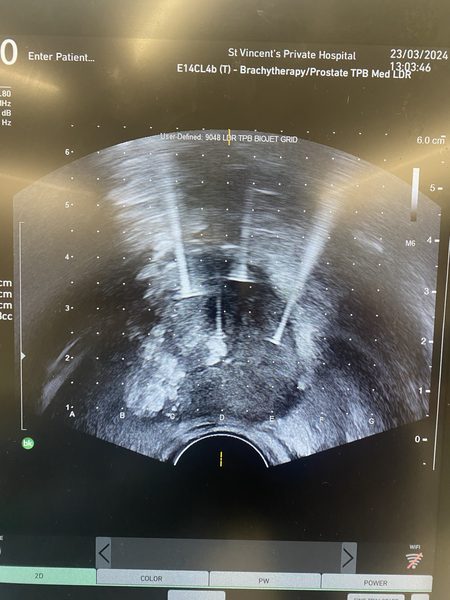
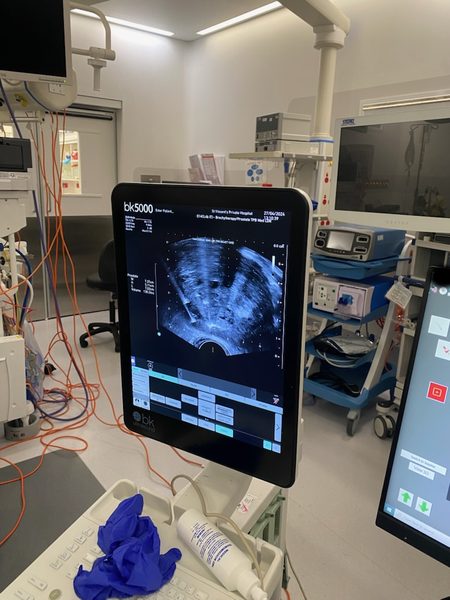
- Imaging set-up. The patient is positioned in lithotomy. Transperineal ultrasound is set up with a brachytherapy-style template grid; the planning multiparametric MRI is fused with the live ultrasound image so that the index lesion and the planned ablation zone are visible together.4,8
- Probe placement. Two to six thin needle electrodes (typically 19-gauge) are placed transperineally through the template into and around the index lesion, in the geometry specified by the treatment plan.1,3,4
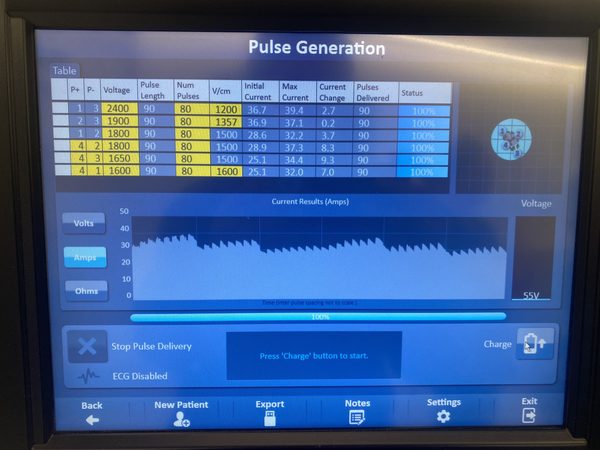
- Test pulses and treatment delivery. Low-voltage test pulses confirm circuit integrity and probe geometry. Treatment pulses are then delivered between probe pairs, gated to the cardiac cycle, and the system monitors current to confirm an effective ablation field.1,3
- Completion checks. The probes are repositioned if a second sub-zone is planned, and contrast-enhanced ultrasound or repeat imaging may be used to confirm coverage.8
- End of procedure. Probes are removed, pressure is held over the perineum, the catheter is left in place for a short period, and the patient is recovered in theatre and then on the ward.4
Operative time depends on the number of sub-zones treated; most single-zone focal IRE prostate procedures are completed in approximately 60 to 90 minutes of theatre time, with additional time for anaesthesia and image fusion.4,7
What to expect: hospital stay and recovery
Length of stay. Most men are admitted on the day of the procedure and discharged the same day or after one overnight stay, depending on hospital and individual factors.4,6,7
Catheter. A urinary catheter is left in for a short period (commonly a few days to one week) to allow the prostate to settle. Removal is arranged at a clinic visit.4,6
Pain. Most men describe the perineal area as bruised or tender for a few days. Most can manage on simple analgesia (paracetamol and a short course of anti-inflammatories where appropriate). Heavier opioid use is uncommon.6,7
Wounds. There are no skin incisions to heal, only the small needle puncture sites in the perineum. A waterproof cover allows showering within a day or two.
Return to activity. Walking from the day of the procedure. Desk-type work is usually possible after about a week, depending on the catheter schedule. Avoid heavy lifting, cycling and strenuous exercise for approximately two to three weeks.
Continence and erectile function. In published focal IRE prostate series, the great majority of men return to baseline continence within the first weeks, and most men who were potent before treatment retain useful erectile function in the months that follow. Pelvic floor exercises and, where appropriate, early use of PDE5 inhibitors are commonly recommended.6,7
Surveillance. Structured PSA testing and a follow-up multiparametric MRI (commonly at around 6 to 12 months, with a planned in-field targeted biopsy where indicated) are part of the ongoing care plan, in line with consensus guidance for focal therapy.4,9
Risks and complications
Every patient is counselled on the following before treatment. The risks of focal IRE for the prostate are usually less severe than those of whole-gland surgery or radiotherapy, but they are not zero, and a defined proportion of patients will need additional treatment.4,5,6,7,9
- Urinary side effects. Short-term urinary urgency, frequency or burning is common in the first weeks. Significant long-term incontinence requiring pads is uncommon in focal IRE prostate series, but is possible, particularly when the lesion sits close to the external sphincter.4,6,7
- Erectile dysfunction. The risk depends on baseline function and on how close the ablation zone sits to the neurovascular bundles. The mechanism of IRE is intended to spare these bundles, and published series report better preservation of erectile function than is typically reported for radical prostatectomy or radiotherapy. It is not zero risk.6,7
- Urinary retention. A short period of catheter dependence is expected; a small minority of patients need a longer catheter period or a brief recatheterisation.4,6
- Haematuria, haematospermia or perineal bruising. Common, self-limiting.
- Urinary tract infection. Antibiotic prophylaxis is given according to hospital protocol.4
- Rectal injury or recto-urethral fistula. Rare in published focal IRE prostate series, with ablation planned away from the rectal wall.4,6
- In-field recurrence and the need for further treatment. A defined proportion of men will have residual or recurrent significant cancer in the treated area on follow-up MRI and biopsy, and will need repeat focal treatment, salvage radical prostatectomy, salvage radiotherapy or systemic therapy. This is part of the consent conversation, not a complication.6,7,9
- Out-of-field new disease. Because the rest of the gland is not treated, new cancer can develop elsewhere in the prostate. This is the rationale for ongoing PSA and MRI surveillance.9
- Cardiac arrhythmia from the high-voltage pulses. Mitigated by general anaesthesia with full muscle relaxation and ECG-gated pulse delivery. Rare in published series.1,3
- Anaesthetic, thrombo-embolic and general surgical risks. Standard for any procedure under general anaesthesia.
NanoKnife at Urology NSW
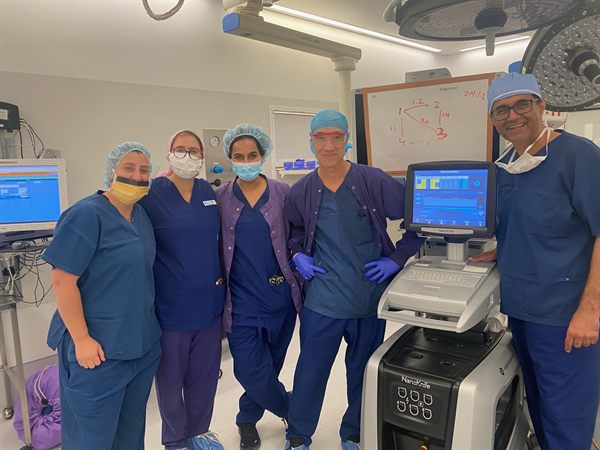
Dr Raji Kooner offers NanoKnife / IRE as one of several options for selected men with localised prostate cancer. NanoKnife sits alongside the other prostate cancer pathways available through the practice: active surveillance, robotic radical prostatectomy, single-port robotic surgery, radiotherapy, brachytherapy and other focal and experimental treatments.
Whether NanoKnife is the right option in any individual case depends on multiparametric MRI findings, targeted biopsy results, prostate anatomy, the patient's baseline urinary and sexual function, and personal priorities. The same review can also confirm whether one of the established whole-gland options is the better fit. There is no fee for a discussion about whether focal therapy is appropriate; it is part of the standard consultation.
Patients who would like to discuss whether NanoKnife / IRE is appropriate for them are welcome to request a second opinion or to telephone the rooms to arrange a consultation.
Frequently asked questions
Is NanoKnife the same as IRE?
NanoKnife is the trade name of the AngioDynamics system used to deliver Irreversible Electroporation. The two terms are often used interchangeably in conversation; "IRE" is the underlying technique and "NanoKnife" is the device that delivers it.16
Will I be awake?
No. IRE is performed under general anaesthesia with full muscle relaxation. The pulses cause involuntary muscle contraction, so deep paralysis is part of safe delivery. The anaesthetic team also monitors heart rhythm so that the pulses are delivered between heart beats.1,3
Is it painful afterwards?
Most men describe the perineum as bruised or tender for a few days, and most manage on simple oral analgesia. The pain pattern is generally easier than after radical prostatectomy or radiotherapy.6,7
Will I need a catheter?
Yes, for a short period - usually a few days to about one week - to allow the prostate to settle. The catheter is removed at a follow-up clinic visit.4,6
Does NanoKnife replace surgery or radiotherapy?
Not in every case. Focal IRE is one option among several for selected men with localised prostate cancer; radical prostatectomy and radiotherapy remain the established treatments with the longest published cancer-control track record. The right choice for any individual patient depends on the cancer characteristics, the anatomy and the patient's priorities.4,5,9
What happens to the cancer that is not treated?
Focal therapy treats the index (most significant) lesion plus a planned margin and leaves the rest of the gland in place. Ongoing surveillance with PSA and multiparametric MRI is essential, because new significant cancer can develop elsewhere in the prostate over time and may need further focal treatment, surgery or radiotherapy.6,9
What if there is residual cancer at follow-up?
A planned follow-up MRI (commonly at around 6 to 12 months) and a targeted biopsy of the treated area where indicated are used to detect residual or recurrent disease. Options for managing residual disease include repeat focal IRE, salvage radical prostatectomy, salvage radiotherapy or systemic treatment, depending on the findings.6,7,9
Is NanoKnife covered by Medicare and private health insurance?
Funding rules change and depend on the procedure code, hospital setting and insurer. Ask the rooms for an estimate of fees and gap, and ask your fund whether your policy covers the proposed item numbers.
Can NanoKnife treat kidney, liver or pancreatic cancer too?
IRE has been studied in selected small renal masses, primary liver cancer and locally advanced pancreatic cancer in dedicated multidisciplinary settings.10,11,12,13,14,15 The rooms at Urology NSW primarily manage urological cancers and can advise on whether referral to a centre with the relevant capability is appropriate.
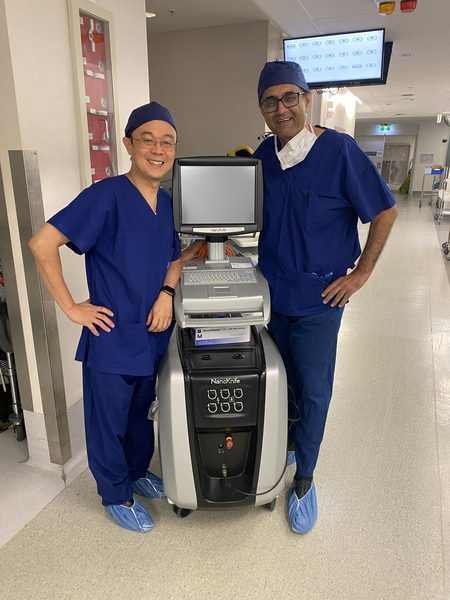
NanoKnife procedure images

References
- Geboers B, Scheffer HJ, Graybill PM, Ruarus AH, Nieuwenhuizen S, Puijk RS, van den Tol PM, Tol JAMG, Bruynzeel AME, van Manen L, Schouten EAC, Lissenberg-Witte BI, van den Bemd BAT, Boetzkes E, van der Tweel I, Gribnau J, Davalos RV, van der Meijden BB, Meijerink MR. High-voltage Electrical Pulses in Oncology: Irreversible Electroporation, Electrochemotherapy, Gene Electrotransfer, Electrofusion, and Electroimmunotherapy. Radiology. 2020;295(2):254-272. doi:10.1148/radiol.2020192190. https://doi.org/10.1148/radiol.2020192190
- Rubinsky B, Onik G, Mikus P. Irreversible Electroporation: A New Ablation Modality - Clinical Implications. Technology in Cancer Research and Treatment. 2007;6(1):37-48. doi:10.1177/153303460700600106. https://doi.org/10.1177/153303460700600106
- Scheffer HJ, Nielsen K, de Jong MC, van Tilborg AAJM, Vieveen JM, Bouwman A, Meijer S, van Kuijk C, van den Tol PM, Meijerink MR. Irreversible Electroporation for Nonthermal Tumor Ablation in the Clinical Setting: A Systematic Review of Safety and Efficacy. Journal of Vascular and Interventional Radiology. 2014;25(7):997-1011. doi:10.1016/j.jvir.2014.01.028. https://doi.org/10.1016/j.jvir.2014.01.028
- National Institute for Health and Care Excellence. Irreversible Electroporation for Treating Prostate Cancer. NICE Interventional Procedures Guidance IPG768, 2023 (migrated to HealthTech Guidance HTG688; replaces IPG572). https://www.nice.org.uk/guidance/ipg768
- Cornford P, van den Bergh RCN, Briers E, et al. EAU-EANM-ESTRO-ESUR-ISUP-SIOG Guidelines on Prostate Cancer - 2024 update. Part I: screening, diagnosis, and local treatment with curative intent. European Urology. 2024;86(2):148-163. doi:10.1016/j.eururo.2024.03.027. https://doi.org/10.1016/j.eururo.2024.03.027
- Blazevski A, Scheltema MJ, Amin A, Thompson JE, Lawrentschuk N, Stricker PD. Median 5-year outcomes of primary focal irreversible electroporation for localised prostate cancer. BJU International. 2023;131(4):470-477. doi:10.1111/bju.15946. PubMed PMID: 36495481. https://doi.org/10.1111/bju.15946
- Collettini F, Enders J, Stephan C, Fischer T, Baur ADJ, Penzkofer T, Busch J, Hamm B, Gebauer B. A multi-center international study to evaluate the safety, functional and oncological outcomes of irreversible electroporation for the ablation of prostate cancer. Prostate Cancer and Prostatic Diseases. 2024. doi:10.1038/s41391-023-00783-y. https://doi.org/10.1038/s41391-023-00783-y
- van den Bos W, de Bruin DM, van Randen A, Engelbrecht MRW, Postema AW, Muller BG, Varkarakis IM, Skolarikos A, Zondervan PJ, Laguna Pes MP, Wijkstra H, de la Rosette JJMCH. MRI and contrast-enhanced ultrasound imaging for evaluation of focal irreversible electroporation treatment: results from a phase I-II study in patients undergoing IRE followed by radical prostatectomy. European Radiology. 2016;26(7):2252-2260. doi:10.1007/s00330-015-4042-3. https://doi.org/10.1007/s00330-015-4042-3
- Hopstaken JS, Bomers JGR, Sedelaar MJP, Valerio M, Futterer JJ, Rovers MM. An Updated Systematic Review on Focal Therapy in Localized Prostate Cancer: What Has Changed over the Past 5 Years? European Urology. 2022;81(1):5-33. doi:10.1016/j.eururo.2021.08.005. https://doi.org/10.1016/j.eururo.2021.08.005
- National Institute for Health and Care Excellence. Irreversible Electroporation for Treating Pancreatic Cancer. NICE Interventional Procedures Guidance IPG579, 2017 (migrated to HealthTech Guidance HTG437; supersedes IPG442, 2013). https://www.nice.org.uk/guidance/ipg579
- Ruarus AH, Vroomen LGPH, Geboers B, van Veldhuisen E, Puijk RS, Nieuwenhuizen S, Besselink MG, Zonderhuis BM, Kazemier G, de Gruijl TD, van Lienden KP, de Vries JJJ, Scheffer HJ, Meijerink MR. Percutaneous Irreversible Electroporation in Locally Advanced and Recurrent Pancreatic Cancer (PANFIRE-2): A Multicenter, Prospective, Single-Arm, Phase II Study. Radiology. 2020;294(1):212-220. doi:10.1148/radiol.2019191109. PubMed PMID: 31687922. https://doi.org/10.1148/radiol.2019191109
- National Institute for Health and Care Excellence. Irreversible Electroporation for Primary Liver Cancer. NICE Interventional Procedures Guidance IPG664, 2019 (migrated to HealthTech Guidance HTG532). https://www.nice.org.uk/guidance/ipg664
- National Institute for Health and Care Excellence. Irreversible Electroporation for Treating Renal Cancer. NICE Interventional Procedures Guidance IPG443, 2013 (migrated to HealthTech Guidance HTG303). https://www.nice.org.uk/guidance/ipg443
- Wah TM, Lenton J, Smith J, Bassett P, Jagdev S, Ralph C, Vasudev N, Bhattarai S, Kimuli M, Cartledge J. Irreversible electroporation (IRE) in renal cell carcinoma (RCC): a mid-term clinical experience. European Radiology. 2021;31(10):7491-7499. doi:10.1007/s00330-021-07846-5. https://doi.org/10.1007/s00330-021-07846-5
- Wendler JJ, Pech M, Fischbach F, Jurgens J, Friebe B, Baumunk D, Porsch M, Blaschke S, Schindele D, Siedentopf S, Ricke J, Schostak M, Kollermann J, Liehr UB. Initial Assessment of the Efficacy of Irreversible Electroporation in the Focal Treatment of Localized Renal Cell Carcinoma With Delayed-Interval Kidney Tumor Resection (IRENE Trial - An Ablate-and-Resect Pilot Study). Urology. 2018;114:224-232. doi:10.1016/j.urology.2017.12.016. https://doi.org/10.1016/j.urology.2017.12.016
- AngioDynamics. NanoKnife System - Instructions for Use and product information. AngioDynamics Inc. (manufacturer documentation; current version varies by region).